Story, cast and setting
Ducky is a duck turned human intern at Goddess Mei's lost-and-found startup in Plumville. The story arrives through request dialogue, optional lines, thank-you mails and the Instapix feed.
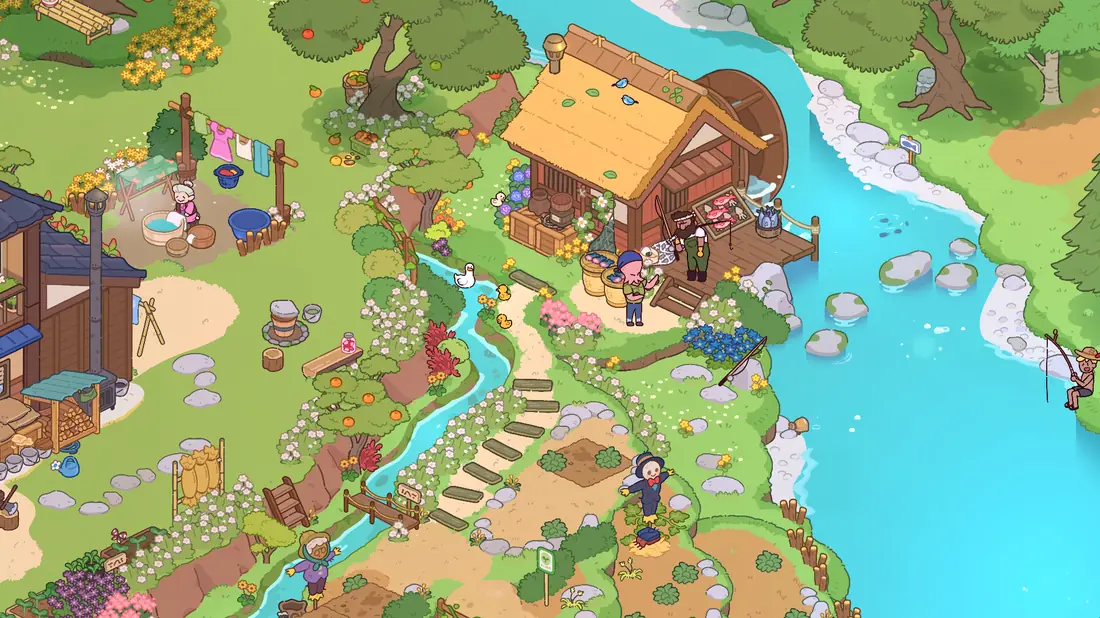
Lost and Found Co. is a workplace comedy wearing a fantasy coat. Ducky is a duck who turned into a human and got an internship; Mei is a dragon goddess running a startup that finds lost things; the office is in a town called Plumville, and the clients are the kind of people who lose a compass in a fight and a crayon box after finishing a masterpiece.
The story is told in small pieces — a request here, a thank-you mail there, an optional line of dialogue in Act 2 of the newest stage — rather than in cutscenes between chapters. This page maps the cast, the setting and the way the plot is delivered, without walking through the ending.
The premise
The Steam description sets it up in one sentence: you help Ducky, a duck-turned-human intern, at Goddess Mei's company — a magical startup dedicated to finding lost items for its quirky townspeople. The short description adds the hook: find lost items, solve puzzles, and help a tiny dragon regain her power.
That last clause is the spine of the story. Mei is a goddess with a problem, and every request the company takes is both a job and a step toward solving it. The game is careful not to make the requests feel like fetch quests; each client has a reason for losing what they lost, and the reasons add up to a picture of Plumville.
The cast
| Character | Role | Where you meet them |
|---|---|---|
| Ducky | Duck-turned-human intern, the player character | Everywhere |
| Goddess Mei | Dragon goddess, founder of the lost-and-found company | The office, and most story beats |
| Kit | Shopkeeper who runs the Kit Shop and takes Ducky on holiday | Kit Shop, Summer Update |
| Mallet | Client with a side quest of his own | A request with a popularity-point gate |
| Kenta | Neighbourhood kid with a coin and a snack obsession | Playtime at Kenta's |
| The Count | Host of the Fangtastic Feast | Fangtastic Feast |
| Elenora Von Matterhorn | Collab guest from Conquest Tactics | Love After Life |
| Toffie Oohlala | Collab guest from Papayaland | Fangtastic Feast |
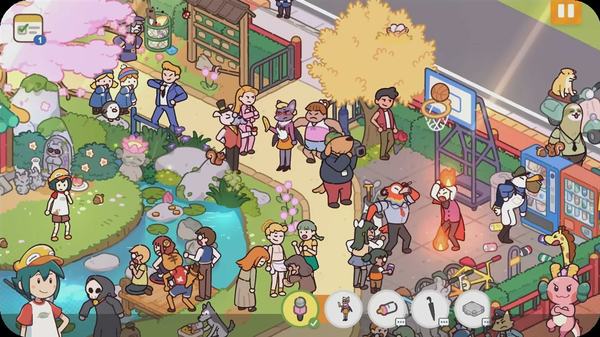
Three of these are worth expanding. Kit is the game's shopkeeper and the closest thing it has to a second lead: the Summer Update opens with Kit taking Ducky on a well-deserved vacation, and the Kit Shop is named after her. Mallet is a client whose side quest caused one of the game's more obscure bugs — patch 1.0.5 fixed a softlock in "Talk to Mallet" that triggered if you had earned enough popularity points before unlocking it, which tells you popularity is a real stat. Kenta appears in an official screenshot offering a coin in exchange for "all the rare snacks from that shop", which is the clearest look the marketing material gives at how a request is pitched.
The setting: Plumville
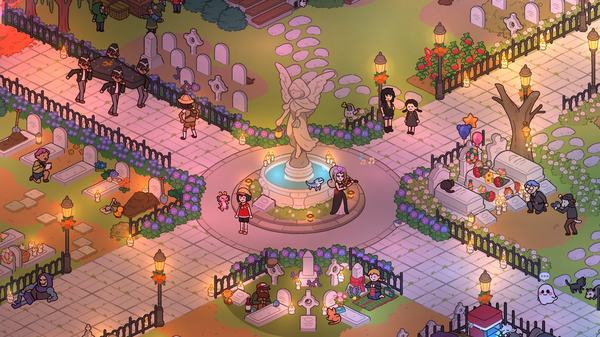
Plumville is the town the company serves, and it is the reason the game can justify a Japanese sweets shop, a harbour, a graveyard and a haunted mansion in the same story. The locations are not a level select — they are neighbourhoods, and the requests move between them as clients arrive.
The office is the anchor. It is where requests are taken, where Ducky's Room sits, where the Kit Shop opens and where the milestones are tracked. It also changes: patch 1.2.0 added more random lobby events, and 1.2.1 fixed duplicate visitor characters, which means the office is meant to feel populated rather than static.
How the story is delivered
Four channels, and only one of them is mandatory:
- Request dialogue. The main story. Clients explain what they lost, Mei comments, Ducky reacts. Skippable with the cutscene button added in 1.0.8.
- Optional dialogue. Lines you get by clicking a character or object that is not required. 1.2.1 added optional dialogue to the chest in Love After Life and optional lines for Ducky and Mei during Act 2 — the clearest evidence that the game hides character work in optional interactions.
- Thank-you mails. Short notes that arrive after a request closes. The demo introduced them; the full game uses them for follow-ups and small gifts.
- Instapix. The in-game photo feed. It is a social app in fiction and a collectible in practice; some stages gate a reward behind taking the photo.
Dialogue history, added in 1.2.0, is the quality-of-life feature that ties these together. If you skip a line, you can read it later instead of replaying the scene.
Why this page does not spoil the ending
The ending is delivered through the same optional, skippable channels as everything else, and the game's own marketing never describes it. Writing a beat-by-beat summary would mean either repeating someone else's playthrough or inventing one, and neither is useful to a player who is mid-story.
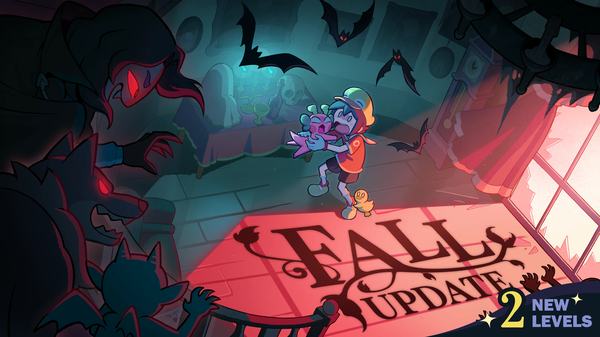
What can be said without spoiling anything: the story resolves around Mei's power and the company's place in Plumville. If you want to see every story beat, do not skip cutscenes on a first run and click the optional dialogue prompts — particularly in the Fall Update stages, where the extra lines were added after release.
The tone, in one example
The best single illustration of the writing is the item description for the crayon box: "Left behind by the young artist once her masterpiece was finished." It is a joke, a character note and a location hint in one sentence. The game is full of these — the compass "got snatched after a fight with a bunch of rude sailors", the sword in a manga studio, the towel in Kenta's house.
If that voice works for you, the story will too. If it reads as twee, the 31 requests will feel long. That is the honest dividing line, and it has less to do with the plot than with whether you enjoy the game's company.
For the mechanical side of the story — how requests unlock and what the milestones track — see How to play. For the collab characters and their furniture rewards, see Collabs and events.