Juju and the hint system
Juju are grey, wobbling ghosts hidden in every stage and spent on hints. There is no achievement for collecting them; the hint marks an area, so search that area by hand before spending a second one.
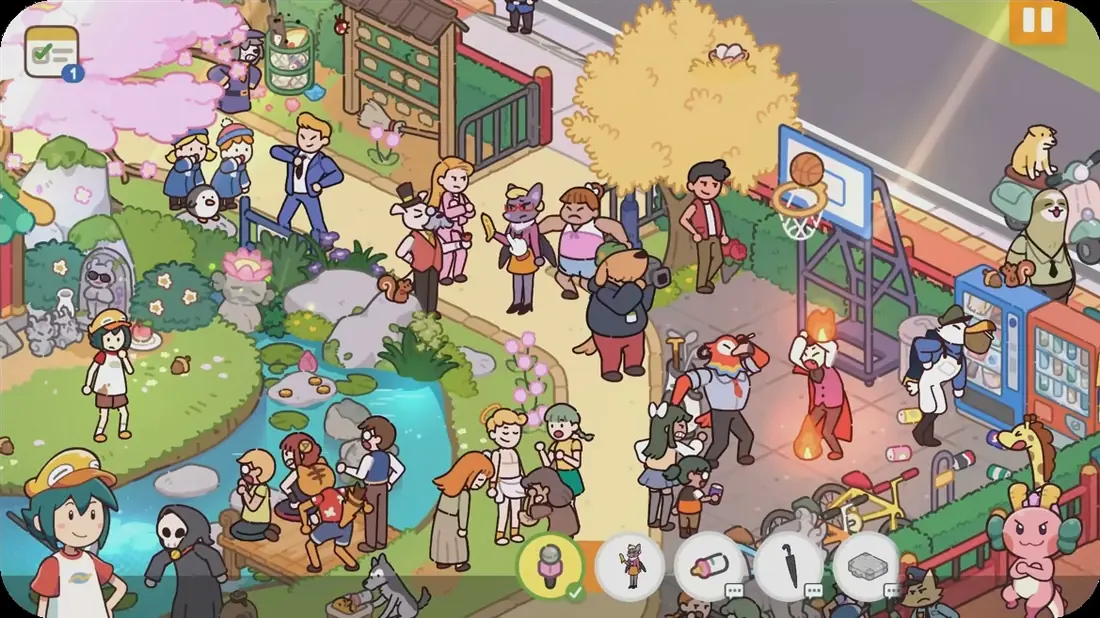
Juju are the ghosts you find in every stage, and they are the only currency in Lost and Found Co. that buys help. The studio introduced them in the 2024 demo as the "Juju Hinting System" — find Juju ghosts, spend them on hints — and the system survived into the full game unchanged in concept, if not in tuning.
If you only learn one thing about Juju, learn how they look: grey, never coloured, with an outline that wobbles. That single detail turns a frustrating hunt into a passive collection.
What Juju are and what they do
Juju are small ghost characters hidden inside each request. Click one and it joins your pool; spend from the pool and the game marks an area of the current scene where an unfound object is sitting. The hint is directional rather than exact — it points at a zone, not at the object.
Three rules govern the system:
- Juju are collected inside stages and spent on hints. The counter is part of the stage HUD, so it is visible while you are searching.
- Hints only work inside a stage. You cannot spend Juju in the office, and the hint UI is part of the stage HUD.
- No achievement is attached. Collecting every Juju in a stage gives you nothing but currency. This is the single most common misconception about the system.
Juju versus the game's other currencies
| Currency | Where it comes from | What it buys | Tracked by achievements? |
|---|---|---|---|
| Juju | Grey wobbly ghosts in every stage | Hints inside a stage | No |
| Plum Coins | Completed requests and objectives | Kit Shop furniture for Ducky's Room | No |
| Instapix posts | Photo moments in stages | Nothing — it is a feed | No |
| Thank-you mails | Closing a request | Small gifts and story follow-ups | No |
The distinction that matters is the first two: Juju is consumable and affects play, Plum Coins are permanent and cosmetic. A 2.1.0 demo patch note is oddly useful here — it fixed "Juju and currency notification UI not hiding when viewing hints", which confirms the game treats Juju and coins as two separate pools with two separate notifications.
How to spot a Juju
Players who mapped the collectibles describe the same tells, and they hold across stages:
- Grey, always. Juju are drawn without colour, which makes them stand out against painted scenes once you know to look.
- Wobbling outline. They do not sit still; the border of the object moves slightly.
- Variable size. Some are tiny, some are enormous. Do not assume you are looking for something small.
- Sometimes behind an interaction. A Juju can be revealed only after you open a drawer, move a curtain or click a prop.
- Sometimes in a secret area. Stages with hidden rooms keep Juju inside them.
The practical method is to treat grey as a filter. Sweep a stage normally, but every time something grey catches your eye, click it. You will collect most Juju without a dedicated hunt.
The hint economy
The studio's 100-day infographic reported 825,158 Juju spent by all players in the first three months. That number is the best evidence for how the economy is tuned: it is a lot of hints, which means the game expects you to use them, and it also means hints are not scarce enough to hoard.
A sensible spending rule:
- Sweep the stage once by hand.
- If one objective remains, spend one hint.
- Search the marked area carefully before spending a second.
- If two hints fail, leave the stage and come back later.
Hints became more reliable over time. Patch 1.0.1 improved hint accuracy "for all supported languages", which is a quiet way of saying the hint text was mistranslated in some locales, and 1.0.3 fixed the hint UI displaying incorrectly. On 1.2.1, a hint points where it says it points.
Where Juju appear, stage by stage
The collectibles are not evenly distributed. Players' location maps for the early stages show the pattern:
| Stage | Juju reported | Where they sit |
|---|---|---|
| The First Request | 2 | Off the main path, in the room's quieter corners |
| The Missing Captain | 5 | Spread across the stage, including the transition areas |
| Runaway Foxes | Several | Against the garden's fence and planting beds |
| Tea Time Troubles | 3 | Around the tea house's furniture |
| Missing Meow | 6 | Across the café, some behind counters |
Those counts come from community location maps rather than from the game, which does not display a per-stage total. Treat them as a planning guide: if a map says six and you have found four, you are not finished.
Why the system works
Juju solve a design problem that hidden object games usually handle badly. Unlimited hints remove the challenge; a cooldown punishes slow players. Juju make hints a resource you find by looking carefully, so spending one feels earned rather than like asking for help.
The system adds a second layer of content without a second layer of UI: you are always looking for the To-do object and the grey ghost that pays for the next hint.
Common questions
Do Juju carry between stages? The counter persists, so what you have collected is available when a later stage defeats you.
Can I buy Juju? No. There is no microtransaction, no shop item and no currency conversion.
Do I need every Juju? No. There is no achievement and no completion metric attached to them.
What happens if I run out mid-stage? You search by hand. The stage is always completable without hints — that is the design premise.
For the stages where Juju matter most, see The First Request and Missing Meow's context in the walkthrough index. For the rest of the economy, see Kit Shop and Ducky's Room.