Beginner guide: the first hour
Talk to every character, open every container, click every grey wobbly object, and finish the optional objective before the main one. The first stage's achievement fires at 100% completion of the request, not when the story beat lands.
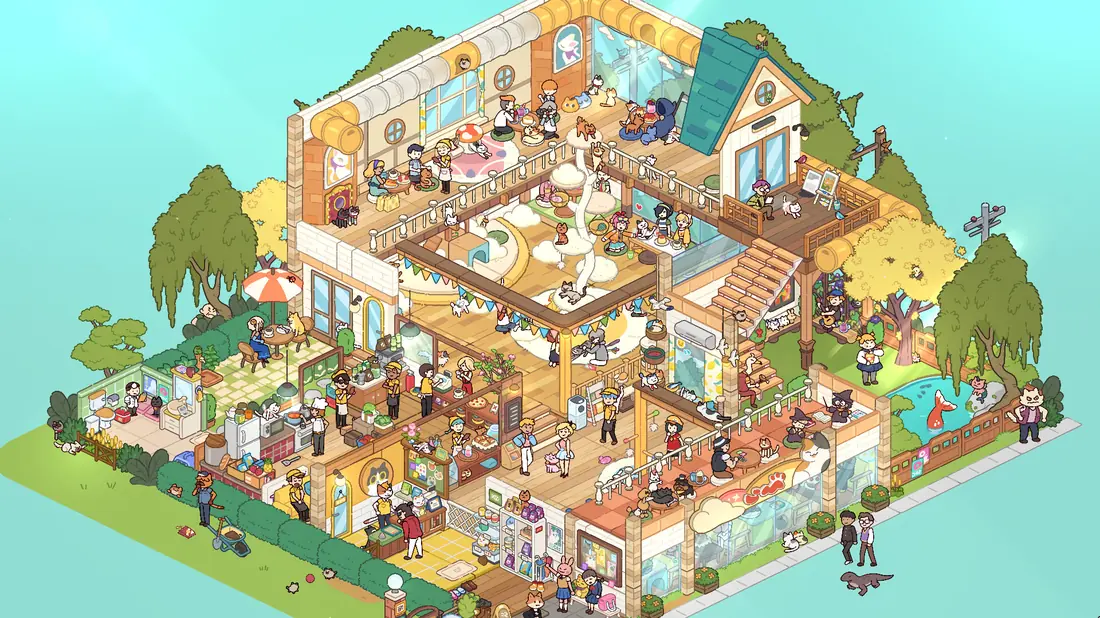
The first hour of Lost and Found Co. is a tutorial that does not look like one. There is no pop-up wall of text: the office gives you a request, the request gives you a scene, and the scene quietly teaches you the three things the whole game runs on — click everything, read what the object says, and spend Juju only when you have already swept the room.
Unlucky Ducky has the highest completion rate of the 31 stages on Steam — 97.9% of players hold its achievement — which is what an opening stage should look like. If you are stuck in the first thirty minutes, the answer is a drawer, a curtain or a person you have not clicked.
What the first request asks for
A request is a small story with a list attached. Ducky and Mei take a client's problem, walk into the scene, and the To-do panel fills with objectives: the main lost item, a handful of secondary objects, and usually one optional side quest that only appears after you touch the right thing. The panel is the only scoreboard that matters. When every line is ticked, the request is at 100% and the stage achievement fires.
The tutorial runs inside the office and is deliberately small: a handful of objects and a first hint. The sequence is called Quack Quack in the patch notes, and if you skip it by accident, 1.0.5 added a replay tutorial button inside Ducky's Room.
The three clicks that matter
- The object itself. Clicking a target picks it up, plays its line and ticks the To-do entry. The line is not flavour text: "A valuable compass. Got snatched after a fight with a bunch of rude sailors" tells you the owner is a sailor and the object travelled through a fight, which is the kind of hint that sends you to the harbour instead of the pantry.
- The thing hiding the object. Drawers, cupboard doors, curtains, laundry, cushions, book covers. A large share of the "impossible" objects in this game are behind an interaction you have not performed yet.
- The grey wobbly thing. That is a Juju. It is never coloured, it moves slightly, and it can be tiny or enormous. Finding Jujus is how you pay for hints, so a click on every grey blob is never wasted.
How to sweep a stage without wasting hints
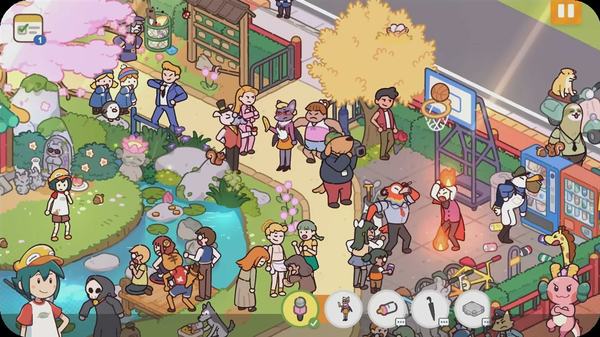
The scenes are dense but they are laid out like illustrations, which means they have a reading order. The sweep that works:
- Start at the edges. Skirting boards, doorframes, the corners of rugs, the top of wardrobes. Illustrators put small objects where the eye stops.
- Then the furniture. Open every container you pass. A closed drawer is not a hiding place, it is an unopened one.
- Then the people. Characters in these scenes hold things, stand in front of things and sometimes move when clicked. A person who looks idle is usually guarding an object.
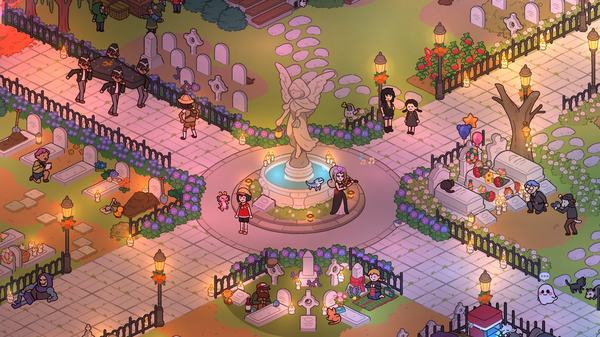
- Then the background. Shelves, foliage, hanging signs, roof tiles. The graveyard and garden stages hide a lot in the greenery.
- Only then spend Juju. A hint after a full sweep is a hint that actually adds information.
Resources: what you earn and what it buys
| Resource | Where it comes from | What it is for |
|---|---|---|
| Juju | Grey wobbly objects hidden in every stage | Paying for hints when a sweep fails |
| Plum Coins | Completing requests and side objectives | Kit Shop furniture and Ducky's Room decorations |
| Thank-you mails | Arrive after a request is finished | Small rewards and story follow-ups |
| Instapix posts | Found inside stages as a photo opportunity | Filling the in-game social feed |
| Milestones | Playtime and completion stats | Tracking your own hours and clears |
The important budgeting rule is the first two lines. Juju is a consumable tied to a single stage's difficulty; Plum Coins are permanent and only buy decoration. Do not hoard coins expecting them to buy hints — they cannot. And do not spend Juju on a main objective you have not swept for yet.
Four mistakes that cost the most time
Treating the timer as a fail state. It is not. The clock in the corner measures your run, not your life; there is no penalty for a slow clear, and the achievement only asks for 100%. Players who rush miss side quests, which is exactly how a request ends at 90% and refuses to close.
Leaving a stage with an open side quest. Optional objectives are attached to the request, not to the lobby. If you walk out with one unfinished, you have to replay the whole scene to finish it.
Ignoring the To-do panel after a quest unlock. Patch 1.2.1 specifically fixed a bug where the To-do UI would not open after a quest unlocked. If you are on 1.2.1 and the panel seems empty, close and reopen it once before assuming the objective is gone.
Restarting instead of re-entering. Save slots (added in 1.0.7) let you keep a clean save before a stage, so a missed objective costs one re-entry rather than a replay from an earlier point.
When to leave a stage
Leave when the To-do panel is empty and the achievement has fired — not when the main object is found. The distinction is the difference between a 30-minute stage and a three-visit stage. If you have swept twice, spent two hints and still have one line open, walk away, do another request, and come back with fresh eyes; the object is almost always somewhere you have already looked, behind something you have already clicked.
The next page in this sequence is How to Play, which breaks the loop into its four phases and explains how a request turns into a new location. If you would rather see a full stage worked through first, start with The First Request.