Kit Shop and Ducky's Room
The Kit Shop sells decoration sets for Plum Coins; Ducky's Room is the editor where you place them. Nothing in either system affects gameplay, hints or achievements — it is cosmetic only.
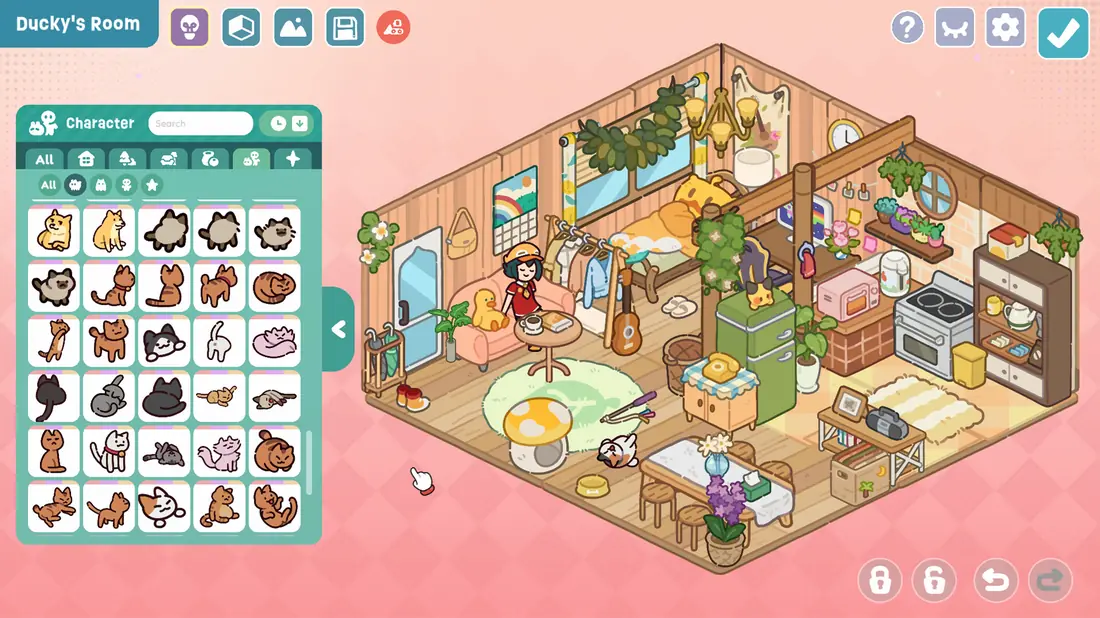
The Kit Shop is where Lost and Found Co. puts its second economy, and Ducky's Room is what that economy buys. Neither is required to finish the game; both are the reason some players keep playing after the credits. Understanding the split saves you from grinding coins for something that has no gameplay effect.
The headline numbers, from the studio's 100-day infographic: 2.3 million items sold in the Kit Shop and 3.2 million coins spent, with Nature Lover, Mei's Shrine and Comfy Bedroom as the three best-selling sets.
What the two systems are
| System | Where it lives | Currency | What it changes |
|---|---|---|---|
| Kit Shop | A shop UI inside the office | Plum Coins | Unlocks furniture and decoration sets |
| Ducky's Room | A separate room editor | Nothing — it uses what you own | Wall, floor, furniture, lighting, object placement |
The Kit Shop is a storefront; Ducky's Room is the editor. You buy in one and build in the other, and the only thing that connects them is your inventory.
How the Kit Shop works
Kit is the shopkeeper — the same character who takes Ducky on holiday in the Summer Update — and her shop sells decoration sets rather than individual trinkets. The demo introduced it with a one-line explanation that still holds: spend extra Plum Coins to unlock even more decorations for the Ducky's Room.
Three practical facts about the shop:
- Plum Coins come from requests. Completing a request and its optional objectives is the only source. There is no way to buy coins with real money.
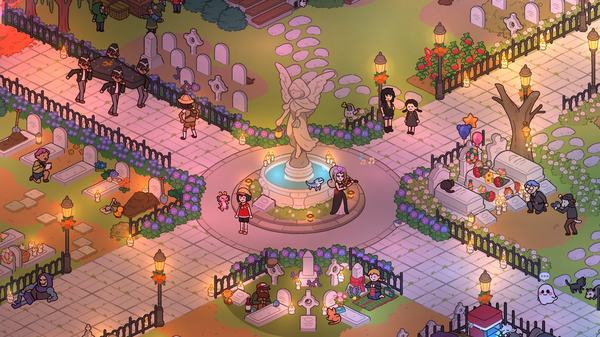
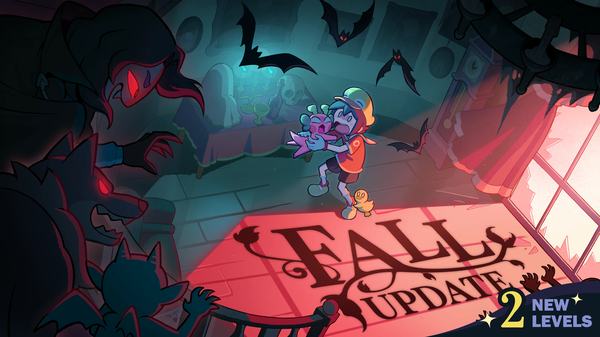
- The shop rotates. New items arrived with the Summer Update, the Fall Update and again in patch 1.2.1, and the Halloween decor is part of the Fall batch.
- Sets are themed. Nature Lover, Mei's Shrine and Comfy Bedroom are the three best-sellers, and each is a coherent room style rather than a random assortment.
The shop UI has had a rough history. Patch 1.0.2 fixed the cart disappearing after multi-category purchases, 1.0.5 removed a stray magnifying glass icon and fixed Kit Shop customisation missing from the Renovate UI, and the demo-era notes record a fix for Kit not playing her animations. On 1.2.1 it behaves.
How Ducky's Room works
Ducky's Room is a full editor, not a dresser. Over the patches it has accumulated:
- Lighting presets, each saving its lighting independently (demo 2.1.0).
- Floor and wall designs, added to let players build more complex rooms (demo 2.1.0).
- Object sound effects and animations while decorating.
- Lock and unlock for placed objects (1.0.7).
- Show/hide UI and keyboard shortcut tooltips (1.0.7).
- Room naming, with a gamepad workaround added in 1.2.1.
- Save-state transforms, fixed in 1.2.1 so scaling and rotating objects are stored correctly.
The last one is the bug that mattered most to decorators: before 1.2.1, a room could lose the scale and rotation of its objects on reload. If you built an elaborate room on 1.2.0, check it after updating.
How to earn Plum Coins faster
Coins come from requests, and the optional objectives pay as much as the main one in most stages. That means the fastest route to a full furniture set is not to replay a stage, but to finish requests you skipped the side quests in — the optional line is where the extra coins sit.
The three best-selling sets in the studio's 100-day data were Nature Lover, Mei's Shrine and Comfy Bedroom, which is a reasonable shopping order if you want the pieces most players found worth buying first.
What the coins are actually worth
Nothing mechanical. This is the single most important thing to know about the Kit Shop:
- No furniture gives a stat bonus.
- No decoration unlocks a hint discount.
- No room layout affects a stage.
- No achievement is tied to buying, owning or placing anything.
So the shop is for players who enjoy the decorating, and a distraction for players who do not. If you are chasing the 31 achievements, skip it entirely until the story is done — the coins will still be there.
Spending order, if you do care
- Buy a full set rather than single items. Sets are designed to fit together; a Nature Lover bed in a Comfy Bedroom room looks like what it is.
- Start with the room shell. Floors and walls change the look more than any single piece of furniture.
- Save the lighting preset last. Light is what makes a room read as a room rather than a collage.
- Leave the collab sets for last. Princess of Valoria, Magical Toffie and Sometime Blue are earned through quests rather than bought, and they are the most distinctive pieces in the game.
The collab sets
Three furniture sets come from the Fall Update's Featured Collab rather than the shop:
- Princess of Valoria — complete Elenora Von Matterhorn's quest in Love After Life.
- Magical Toffie — complete Toffie Oohlala's quest in Fangtastic Feast.
- Sometime Blue — spot the mystery guest four times across Plumville.
They cannot be bought with Plum Coins, which makes them the only furniture that has to be earned. If you see a room with a Valoria banner, that player finished a specific quest line.
Is any of it missable?
No. Requests can be replayed, coins persist, and new items are added to the existing catalogue rather than replacing it. The only time-sensitive thing in the whole system is the collab, and that is a quest rather than a purchase.
For the quests that award the collab sets, see Collabs and events. For the currency you spend on hints rather than furniture, see Juju and hints.