Is it worth it?
Yes if you want a beautiful, gentle hidden object game with 31 stages and no fail state. No if you need progression systems or fail states. At $14.39 it is about $1.69 per hour at the average playtime.
Lost and Found Co. is easy to recommend and easy to bounce off, and the difference is almost entirely about what you want from a hidden object game. If you want dense, beautiful scenes and gentle stories, it is one of the best in the genre. If you want mechanical progression, fail states or a reason to optimise, it will feel like a picture book you cannot put down and cannot speed up.
Here is the case for and against, with the numbers that exist.
The metrics
| Metric | Value | Date |
|---|---|---|
| Steam reviews | 2,966 | 2 November 2026 |
| Review summary | Overwhelmingly Positive | Store page, November 2026 |
| Metacritic | 90 | Studio announcement, April 2026 |
| Copies sold | 100,000+ | 4 September 2026 |
| Price now | $14.39 (20% off $17.99) | 2 November 2026 |
| Average playtime | 8 h 32 m | Studio infographic, 6 July 2026 |
| Stages | 31 | 1.2.1 |
| Steam Deck | Verified | Store page |
The review count is the most useful number here. 2,966 reviews is not a niche cult following and not a mass-market hit — it is a well-liked indie that found its audience. The Overwhelmingly Positive label means more than 95% of those reviews are positive, which for a hidden object game is a strong signal about the art and the tone rather than the difficulty.
What the game does well
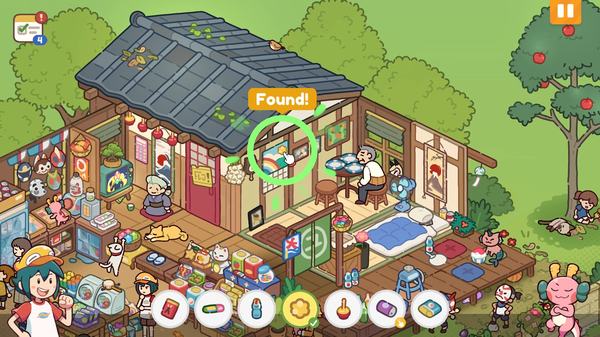
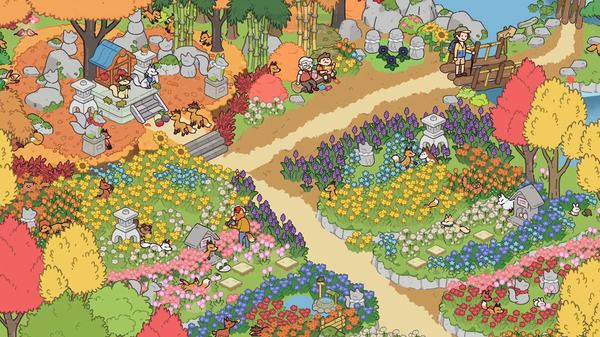
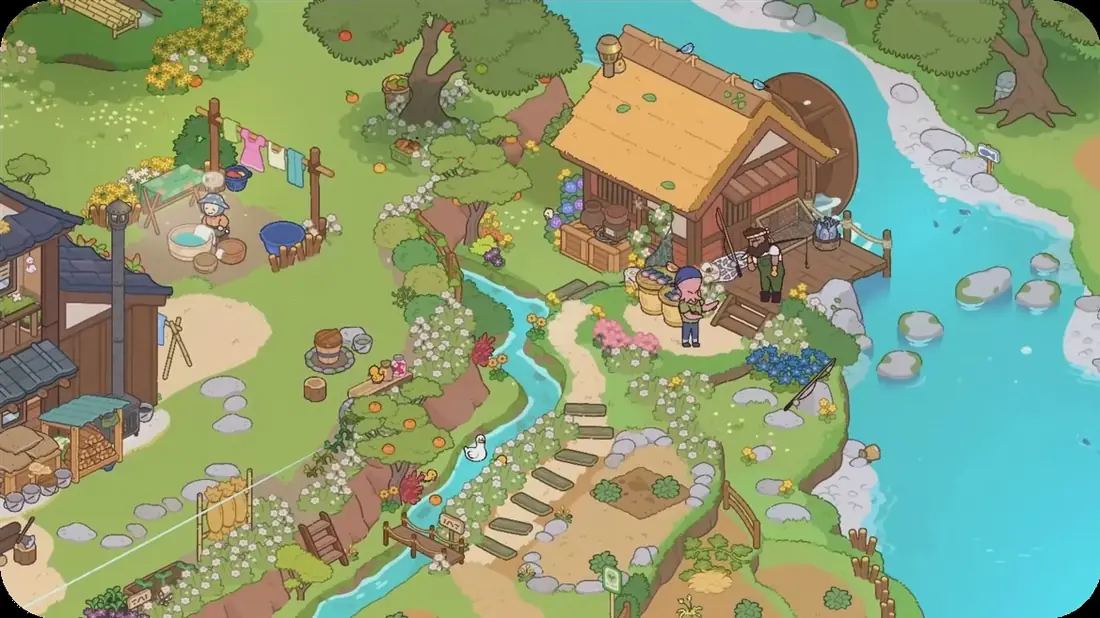
The illustration. Every stage is a hand-painted scene with dozens of interactive props, and the art direction holds across 31 locations — a Japanese sweets shop, a harbour, a graveyard, a haunted mansion. The screenshots on this site are all official; none of them are mocked up.
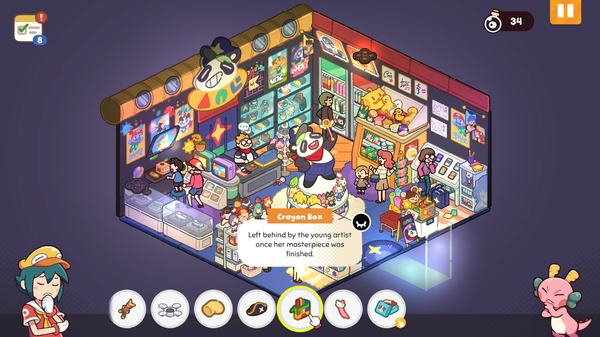
The writing. Requests are small stories rather than checklists. The client who lost a compass is a sailor with a grudge; the child who lost a crayon box finished a masterpiece first. The game is never mean, and it rarely wastes a line.
The accessibility work. Save slots, colourblind mode, brightness and contrast sliders, controller support, a mouse-only option, "playable without timed input" and touch/pen support all arrived post-launch. For a genre that often assumes a mouse and good eyesight, that is unusual.
The post-launch support. Twelve builds in eight months, two free content updates, and a Switch port announced. The studio is clearly still working on it.
Where it falls short
The loop does not evolve much. You click objects, you find them, you move on. Side quests add a layer, and the Fall Update stages add acts, but the core verb never changes. If you need mechanical progression to stay engaged, eight hours is a long time.
Completion is gated on optional content. The achievement requires 100% of a request, including side quests that only appear after a trigger. Players who do not read the To-do panel will finish the story and still be missing achievements.
The decoration system is cosmetic. Plum Coins buy furniture for Ducky's Room and nothing else. There is no gameplay bonus, no stat, no unlock. If you are the kind of player who wants a reason to engage with a shop, this one will not give you one.
The Fall Update is recent. Two of the 31 stages are three weeks old, and 1.2.1 already had to fix a soft lock in one of them. Expect another patch before the Switch release.
Who it is for
| If you like… | This game… |
|---|---|
| Hidden Folks, A Little to the Left, Is This Seat Taken? | Fits directly alongside them — the studio bundled with all three at launch |
| Cozy games with strong art direction | One of the better-looking examples in the genre |
| Short sessions with no fail state | Ideal: every stage can be left and resumed |
| Story in small doses | 31 self-contained vignettes with a light meta-plot |
| Systems, builds, optimisation | Not here — the systems are deliberately thin |
The genre comparison is not arbitrary. Bit Egg launched with bundles pairing Lost and Found Co. with Hidden Folks, A Little to the Left and Is This Seat Taken?, which is the studio telling you exactly which shelf it belongs on.
The value question
At $14.39, the game costs about $1.69 per hour at the studio's average playtime. That is in line with a premium indie and well below the genre's typical value, which often leans on enormous object counts rather than art.
The deeper question is whether you will finish it. The completion data says most players will not: 34.8% of players cleared Smoothie Showdown, the gate before the Fall Update, and 8.2% have cleared the newest stage. If you are likely to stop after five hours, the price per hour doubles.
The verdict
Buy it now if you want a beautiful, gentle hidden object game with a lot of hand-drawn scenes and no pressure. Buy it on sale if you are curious but unsure — the 20% discount has been the standard since June, so waiting costs you nothing but time.
Skip it if you need progression systems, fail states or a reason to optimise. Skip it if you bounce off games that are mostly about looking carefully.
The Switch version in early 2027 is the other option. It adds four-player co-op and portability, which are real differences rather than marketing ones — but it has no date beyond "early 2027", and the PC version is available now at its lowest price.
For the full feature comparison, see Platforms; for how long the game actually takes, see How long to beat.