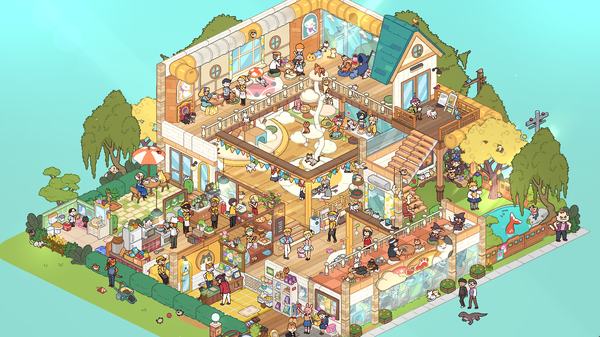
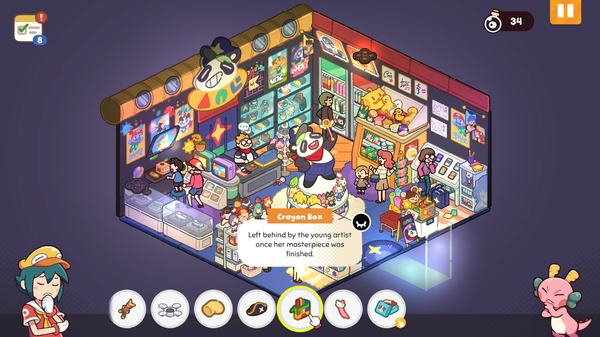
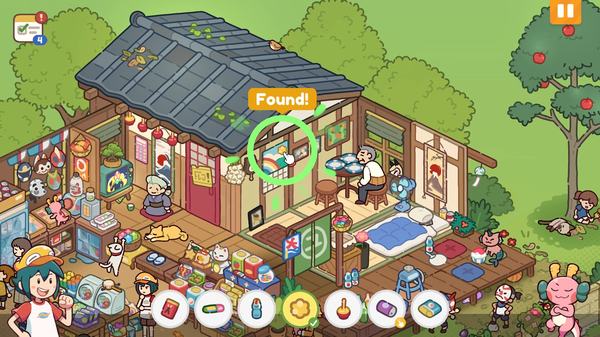
How long to beat
The studio's published average is 8 hours 32 minutes across all players. That works out to about 16.5 minutes per request, but it averages five-minute office requests with forty-minute Fall Update stages.
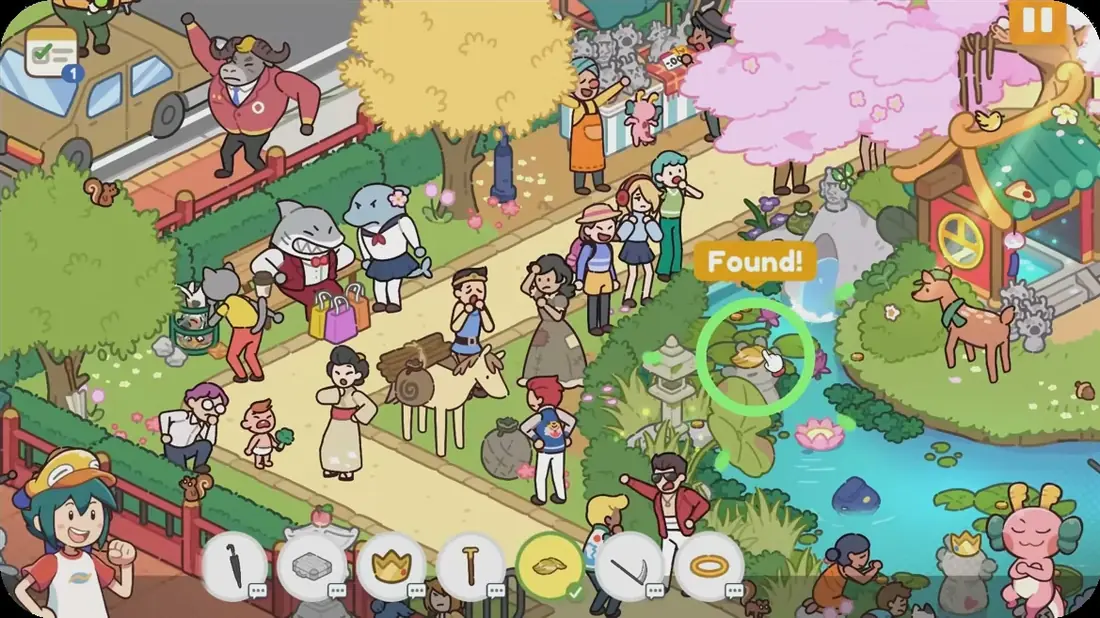
The only official playtime figure for Lost and Found Co. is 8 hours 32 minutes, published by Bit Egg in its 100-day infographic on 6 July 2026. That is an average across everyone who played in the first three months — finished or not — so it is a reasonable estimate for a normal playthrough and a poor estimate for a completionist run.
Here is the honest breakdown of what the number includes, what it hides, and how to guess your own pace before you buy.
The numbers we actually have
| Metric | Value | Source and date |
|---|---|---|
| Average playtime | 8 h 32 m | Studio 100-day infographic, 6 July 2026 |
| Requests in the game | 31 | Steam achievements, 2 November 2026 |
| Implied time per request | ~16.5 minutes | 512 minutes ÷ 31 stages (derived) |
| Lost items found by all players | 32,000,000+ | Same infographic |
| Juju spent by all players | 825,158 | Same infographic |
| Players who finished the newest stage | 8.2% | Steam global stats, 2 November 2026 |
The implied 16.5 minutes per request is the most useful derived figure on this page, and also the most misleading. It averages a five-minute office request with a forty-minute Fall Update mansion. Early stages are short; late stages are not.
Why the average is a fair estimate
Three things keep the playtime tight:
- No backtracking penalty. Re-entering a stage keeps your found objects. You are never asked to replay content you have already cleared unless you want the achievement.
- No fail state. The timer is a statistic, and "playable without timed input" is an official Steam category. You cannot lose progress by being slow.
- Short dialogue. The story is told in short scenes, and 1.2.0 added a dialogue history panel so you can skip a line and read it later instead of replaying a conversation.
Why a 100% run takes longer
The 8h 32m average includes players who stopped halfway. The completion data shows how few finish:
- 97.9% of players cleared Unlucky Ducky.
- 34.8% cleared Smoothie Showdown, the late-game gate before the Fall Update.
- 8.2% cleared Fangtastic Feast, the newest stage.
A player who clears all 31 requests is doing roughly three times the work of the median player. The extra time is not in the main objectives — it is in side quests, Juju hunts and re-entries after a missed optional line. The side quest page explains why that last category is the biggest time sink.
What actually slows a run down
The 90% trap. A stage that sits at 90% because one optional chain was never triggered. Every replay is a full stage re-entry, and re-entry is where players lose twenty minutes to a single missing object.
Hunting Juju for hints you did not need. Juju is finite per stage and the hint is only as good as your sweep. Spending three hints on a stage you have not swept properly is the most common waste of time in the game.
Decoration detours. The Kit Shop and Ducky's Room are cosmetic. There is no stat bonus, no gameplay unlock, no achievement. If you are timing your run, skip the room editor entirely until you have finished the story.
Reading every dialogue twice. With the dialogue history added in 1.2.0, there is no reason to replay a scene for a missed line.
A realistic way to estimate your own time
Instead of trusting a global average, use your own first three stages:
- Time your first clear (most players take longer than average because of the tutorial).
- Time your second and third.
- Multiply the average of stages two and three by 27, then add extra for the four post-launch stages — they are the longest in the game.
If your average is around 15 minutes, you are on the 8-hour pace. If it is 25 minutes, expect closer to 12 hours. The Fall Update pair alone will take most players longer than any two base-game stages.
Is the length a problem?
For the price, no. At $14.39 in the current sale, eight and a half hours works out to under two dollars an hour, and the game is built to be replayed — the achievement structure assumes you will revisit stages for side quests. The more relevant question is whether the loop holds up. The Steam reception (2,966 reviews, Overwhelmingly Positive) and the studio's own 100,000-copy milestone suggest it does for most players.
What the length does mean is that the Fall Update content is genuinely late-game. If you are buying specifically for Love After Life and Fangtastic Feast, you are buying a 30-hour game to reach two stages near the end, not a two-hour add-on.
Where the hours go, stage by stage
| Part of the game | What it costs you | Why |
|---|---|---|
| First hour | Tutorial and first request | Learning the sweep |
| Early requests | Short stages, quick clears | Small scenes, few objectives |
| Middle block | The bulk of the 8 h 32 m | Larger scenes, side quests appear |
| Late base game | Longer challenge requests | Apartment Apocalypse, The Missing Captain, Smoothie Showdown |
| Post-launch | The four added stages | Two acts, multi-room mansions, collab quests |
If you want to see what the late-game time sink looks like before you commit, read Apartment Apocalypse's context in the walkthrough index, or go straight to the Fall Update walkthrough.